From Invisible to Cited by AI in Days
A commercial flagpole manufacturer had 5,000+ product configurations, engineering data covering 41,375 US zip codes, and deep technical expertise. None of it was visible to search engines or AI answer systems. We changed that.
The Problem
The client's product data was locked in JavaScript. Their interactive tools (wind speed calculators, product configurators, specification generators) contained valuable engineering data, but search engines rendered an empty shell. AI answer engines like ChatGPT, Perplexity, and Google AI Overviews had no idea the company existed for informational queries.
Meanwhile, competitors with simpler products but crawlable content were winning organic search across every relevant keyword.
The Approach
We started by ingesting the client's full product catalog, engineering specifications, and industry standard references. AI-assisted document analysis structured 5,000+ SKU configurations, wind rating data for every US zip code, and compatibility rules across dozens of product lines.
Within days, we understood their product data well enough to build from it.
What We Built
- Wind Speed Lookup Tool: Interactive map with 41,375 zip codes, ASCE 7-10 wind speed data, and NAAMM-rated flagpole recommendations with PDF report export
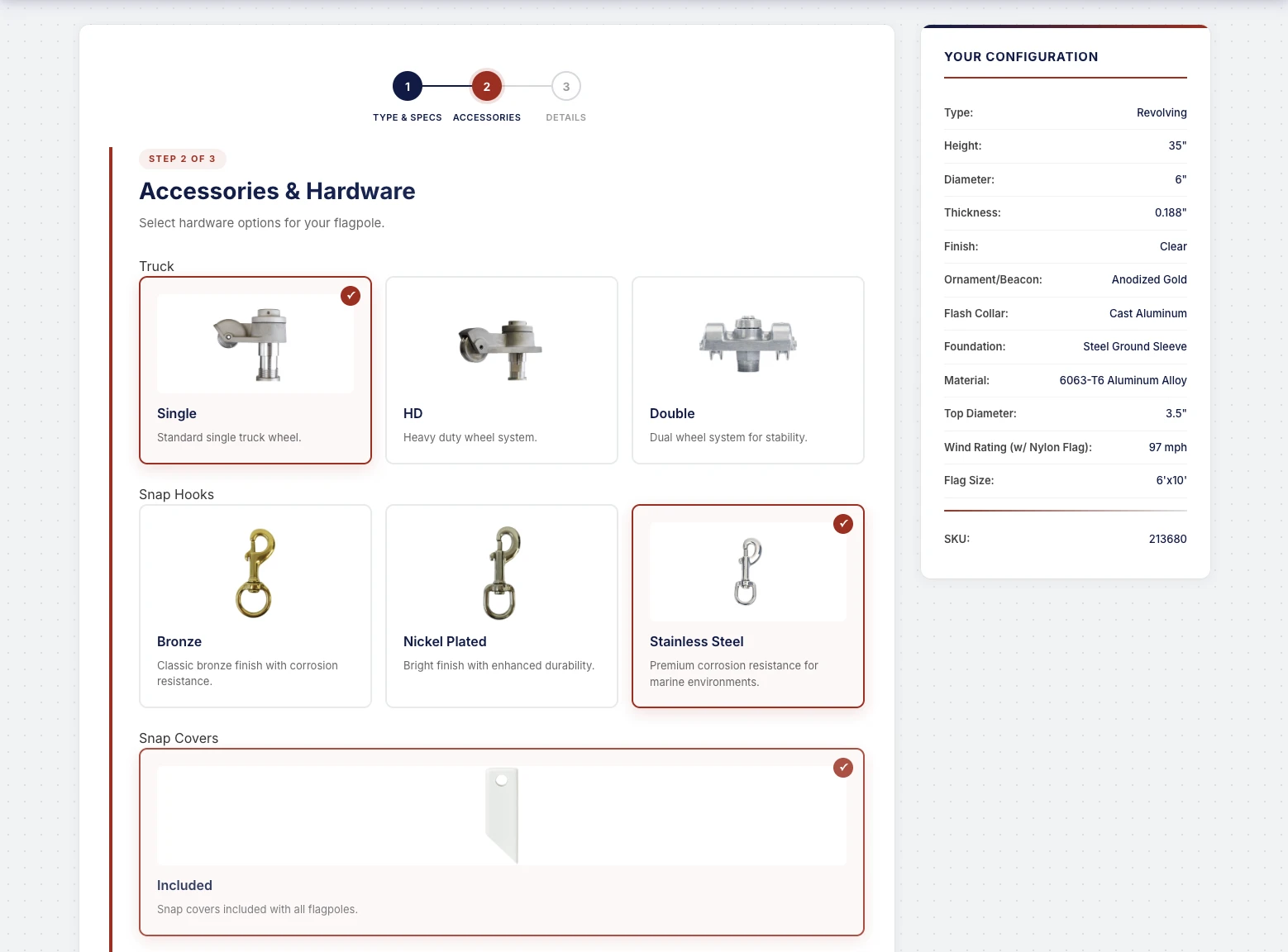
- Product Configurator: 3-step wizard covering pole type, accessories, and branding with real-time pricing across 5,000+ SKU combinations and branded PDF cut sheet generation
- Interactive Specification Builder: Architect-facing CSI Section 107500 generator with multi-pole support, inline dropdown customization, and Word document download
- Beacon Selection Wizard: 4-question recommendation engine for aviation obstruction lights based on pole type, height, diameter, and electrical access
- AI-Powered Plan Analyzer: Internal sales tool that parses uploaded spec PDFs, extracts flagpole requirements, and maps them to SKU recommendations using Claude AI for complex documents
- Operations Tools: Commission calculator, component reorder dashboards, and bid pipeline manager to streamline internal processes
The SEO/GEO Layer
Building the tools was half the job. The other half was making the data inside them visible to machines. We created static HTML reference content blocks placed below each tool on the website: wind rating tables, FAQ accordions, product specs, and engineering references. All in crawlable, structured format with Schema.org JSON-LD (FAQPage, Product, SoftwareApplication schemas).
Four interconnected tool pages formed a topical cluster, each strengthening the others.
The Results
The wind speed tool page went from unindexed to position 3-4 for target keywords within days of deployment. More importantly, Google's AI Overview began citing the company as a source, pulling specific technical content (NAAMM FP 1001-07 standards, wind rating methodology) directly from the reference content blocks.
No competitor in the commercial flagpole industry has comparable structured data, interactive tools, or AI citations. The topical cluster of 4+ tool pages continues to compound in authority.